Timekeeper

Howard Grimes was the drummer at the heart of the Memphis soul sound. He played on the early Stax sessions that launched Carla Thomas and William Bell. He sat in the Hi Rhythm Section behind Al Green, Ann Peebles, and Syl Johnson, providing the pulse of records that went gold, won Grammys, and got sampled by the Notorious B.I.G., Mary J. Blige, and Kanye West. Willie Mitchell called him a timekeeper — put the clock on him, found him perfect with the second hand. He never had a hit of his own.
Timekeeper is Grimes's memoir, told in his own voice with Preston Lauterbach — gruff and smooth by turns, in the vernacular of Memphis itself. It covers his childhood in North Memphis, his education under band director Emerson Able at Manassas High School, his years at Stax and Hi Records, and the slow fade of the world that made him. It is also a history of Memphis soul from the inside — the studios, the sessions, the musicians, and the city that produced them.
The book grew out of a decade of friendship between Grimes and Lauterbach, who talked on the phone nearly every day during the Covid years. Howard Grimes died in February 2022. Co-authored with Preston Lauterbach.
Critical Acclaim
“The book is written the way Grimes talks, rhythmically, like the true storyteller he is, in the vernacular of Memphis itself. At times, it’s gruff, and at times smooth, but there is no missing the point….Howard Grimes and Preston Lauterbach penned a book that will resonate with historians, musicologists, and soul lovers of all types. Timekeeper: My Life in Rhythm deserves a spot in your collection.
J. D. Nash, American Blues Scene
An “Enlightening memoir… [of] how [Grimes] gave Southern soul its funky heartbeat"
Elias Leight, Rolling Stone
“An informative, breezy read containing many colorful stories about life in the studio, on the road and at home.”
Jeff Hannusch, Offbeat
“Reading the book, to its credit, is very much like hearing stories from the great man himself.”
Alex Green, The Memphis Flyer
“Timekeeper packs a lot of history, insight, and emotion into its pages. It’s a fast but essential read for anyone wanting to know how the magic of Memphis soul was created.”
Noah Schaffer, ArtsFuse
“Many readers may find themselves wishing Grimes had shared more of the stories from his life, given the easy-going approach that he and Lauterbach utilize, one that would make a book twice as long just as captivating. The drummer tells it like it is, sharing the ups and downs, the joys and the moments of regret, speaking from his heart at every turn.”
Mark Thompson, Blues Blast Magazine
After the legendary band director Emerson Able suggested Preston call Howard Grimes to interview for The Chitlin’ Circuit, Howard Grimes became one of Preston’s dearest friends. During Covid, after Preston had moved from Memphis to Virginia, he and Howard talked on the phone nearly every day. The book came out of that time. These are a few of the photos Preston has of Howard over the years.


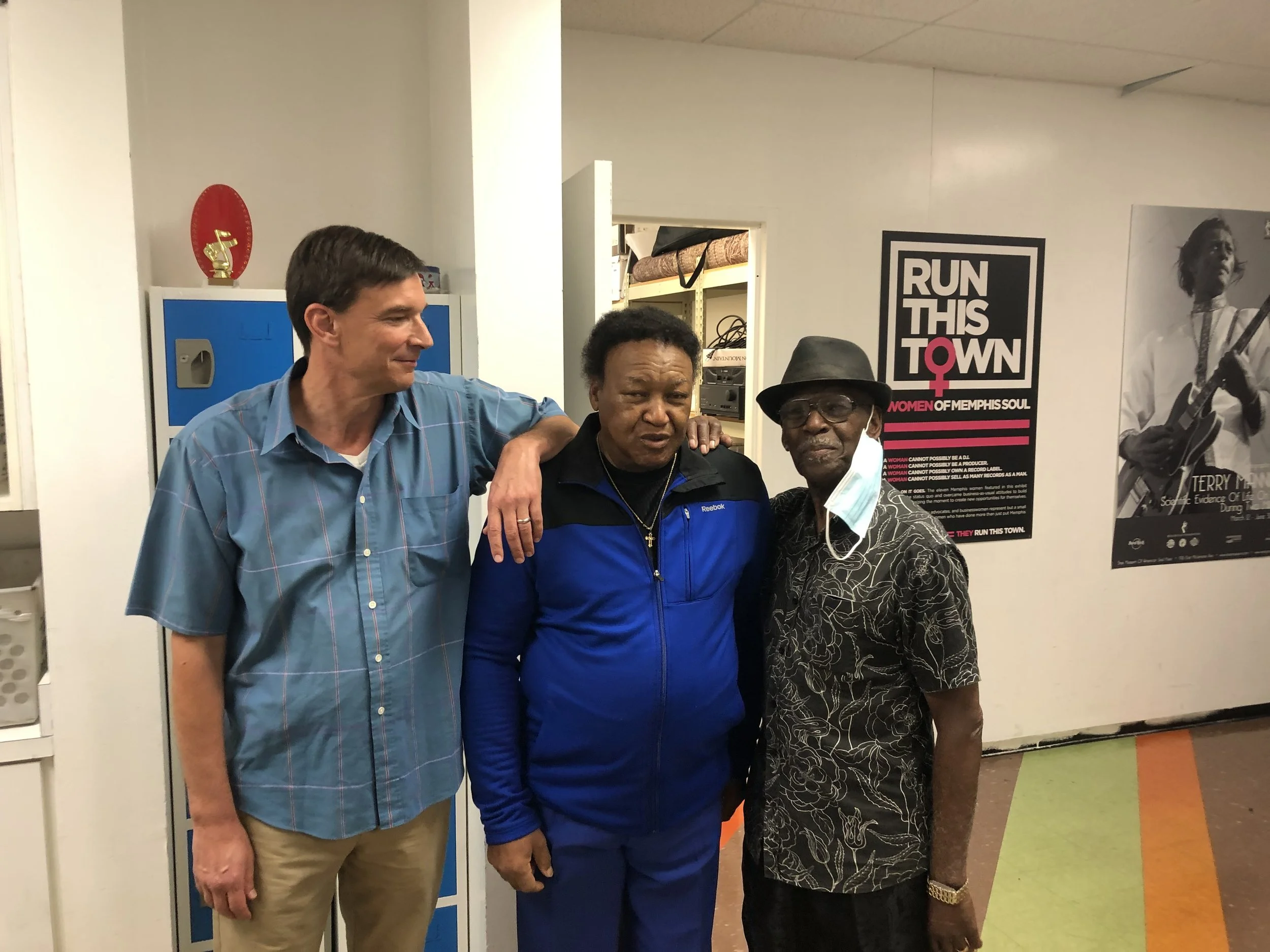
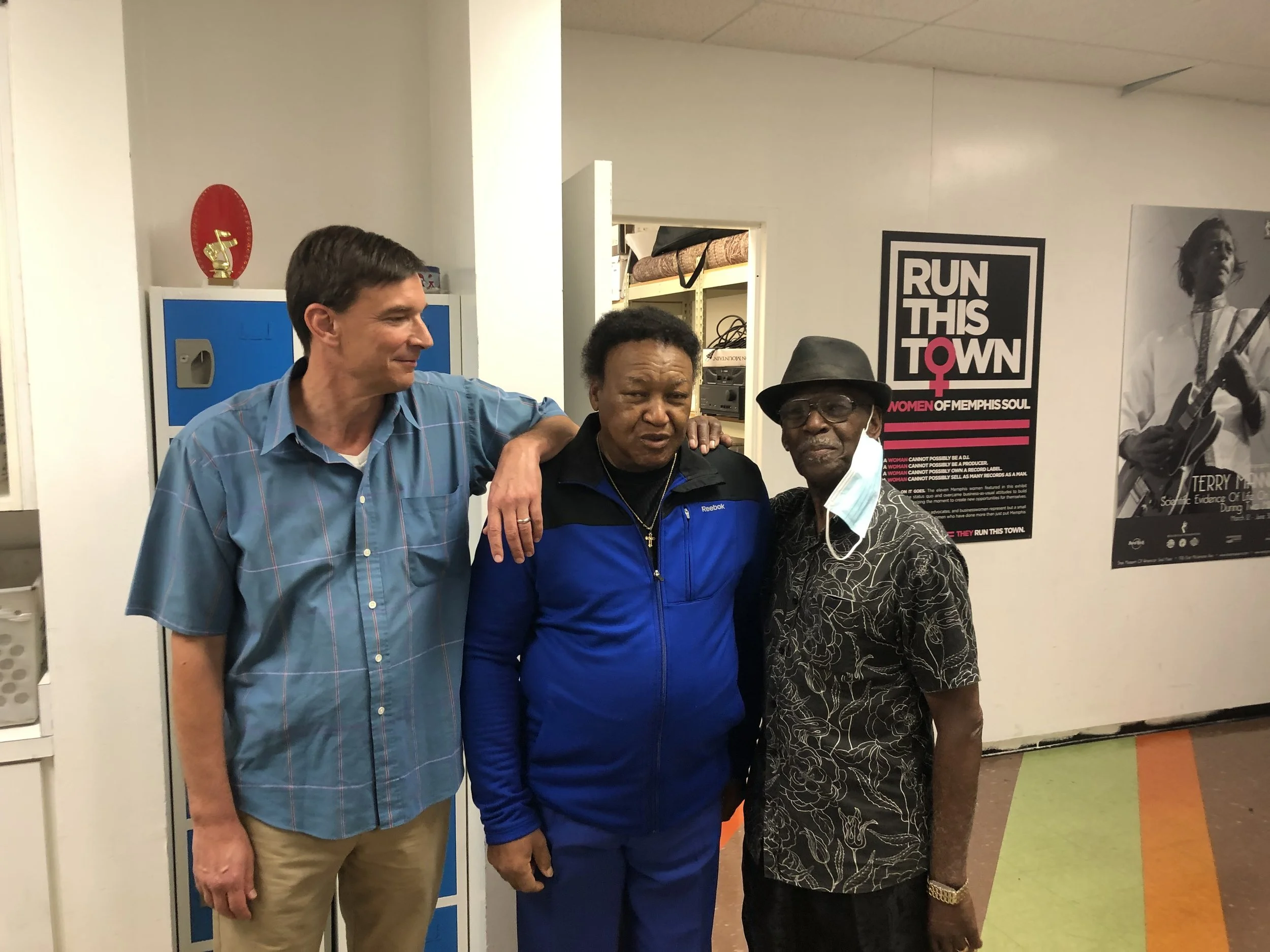
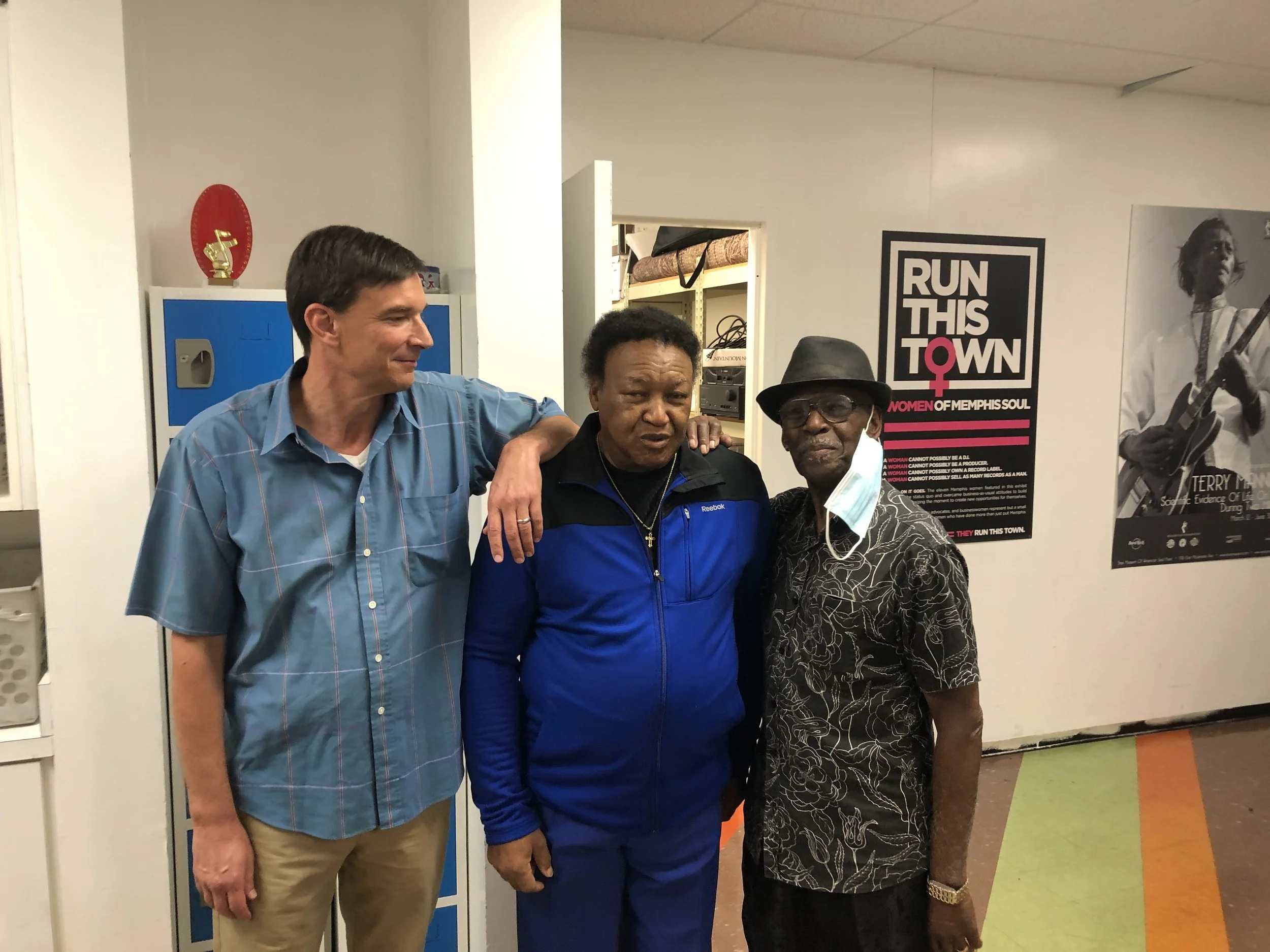

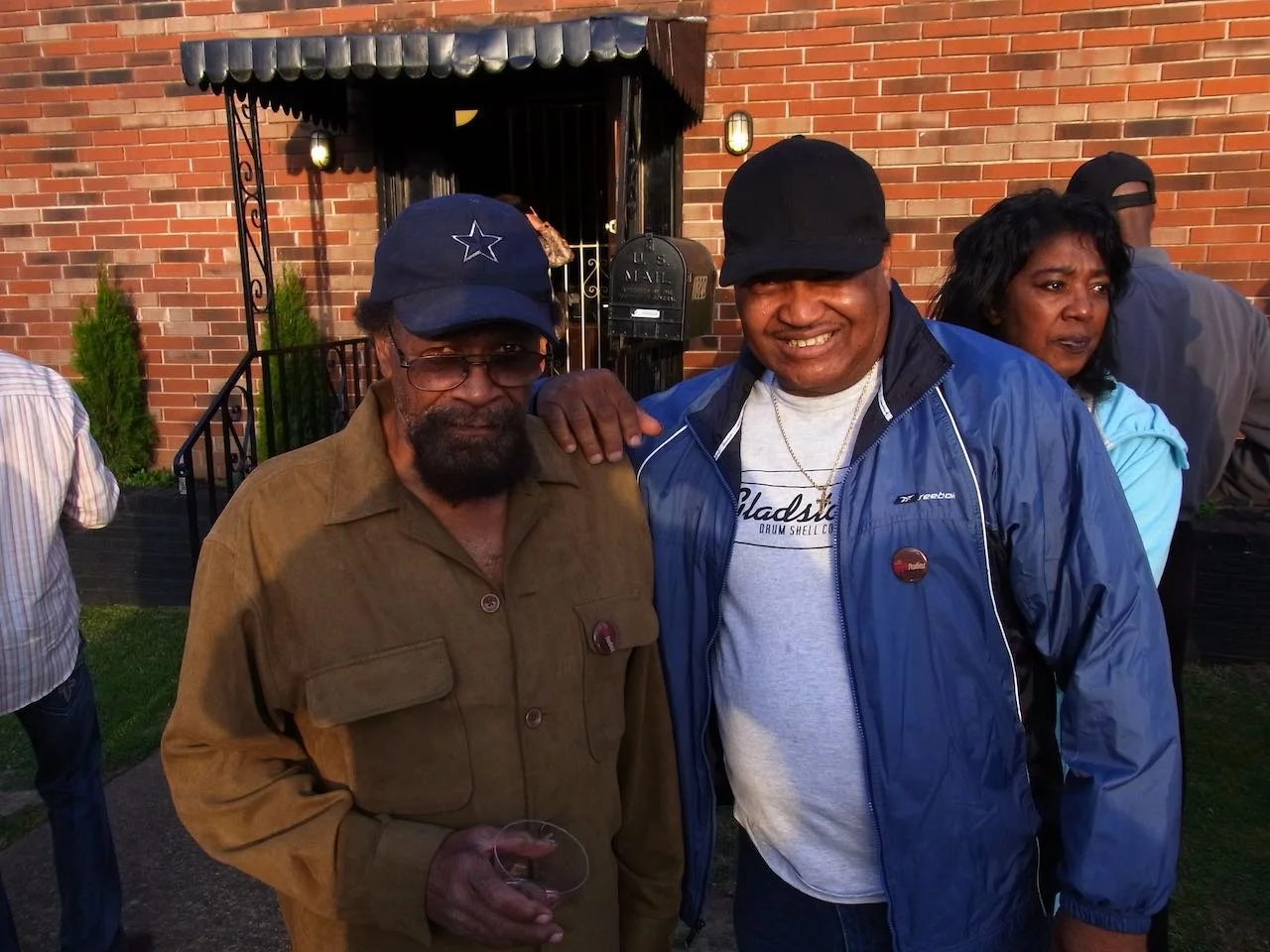
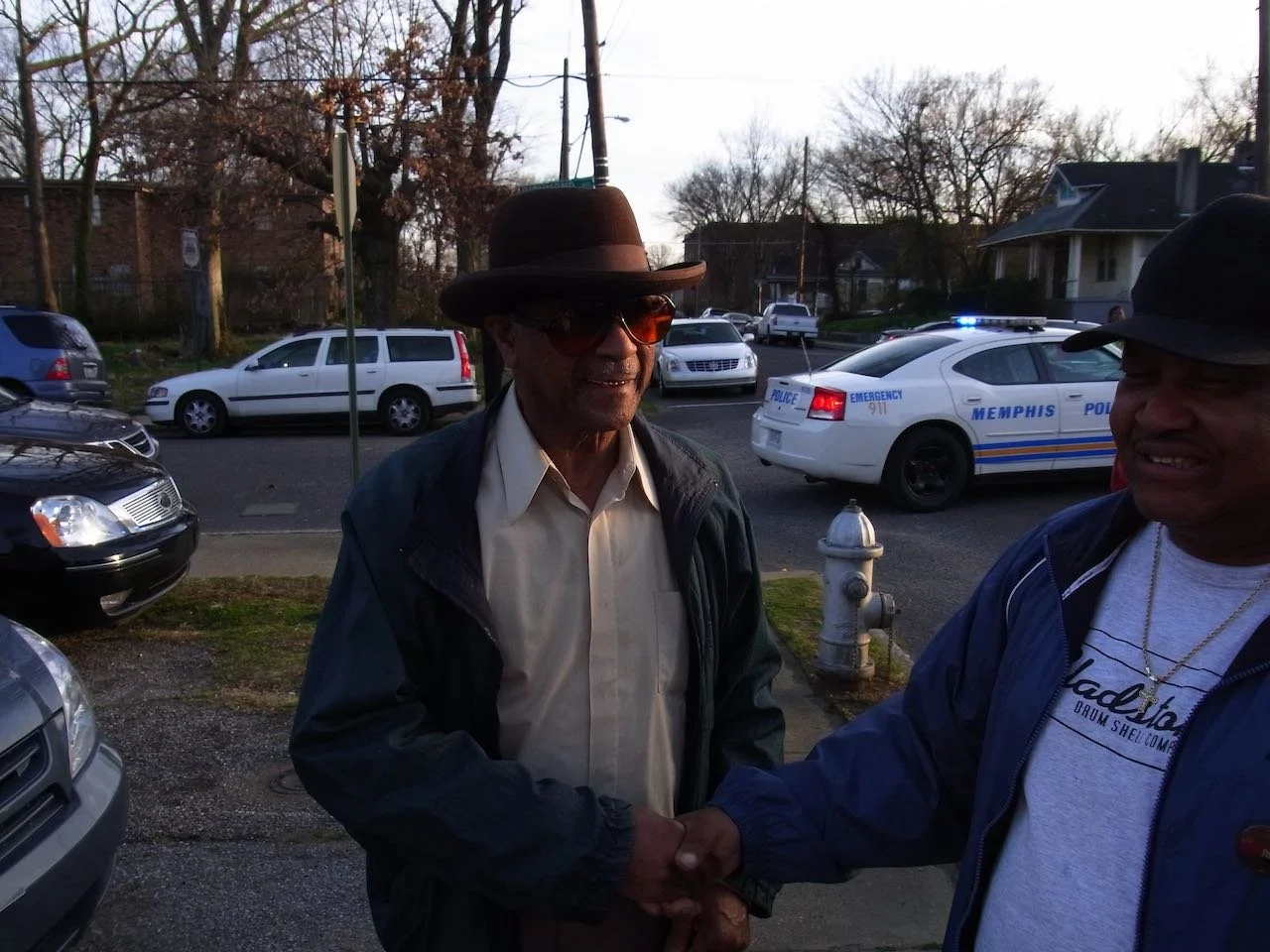
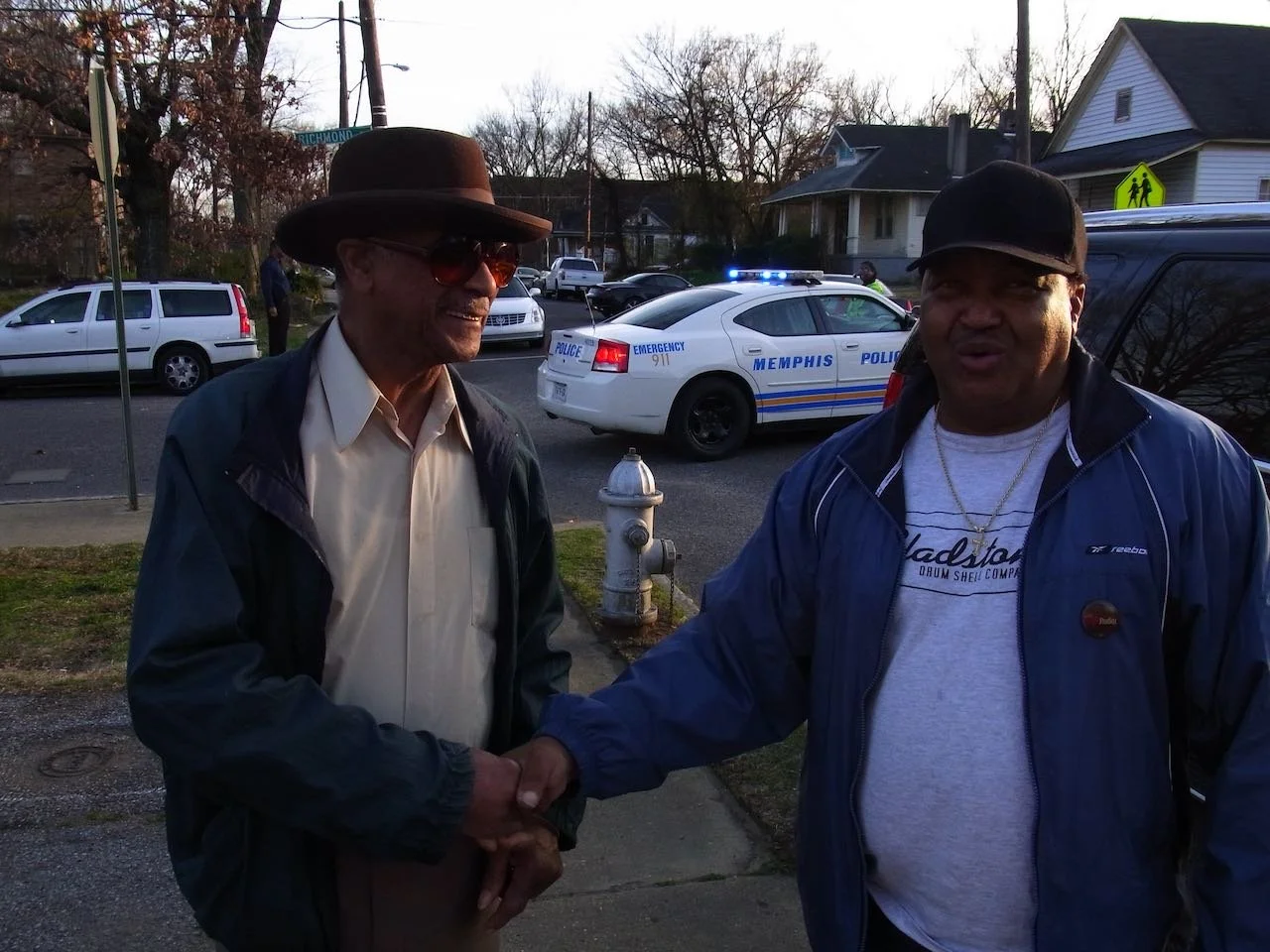
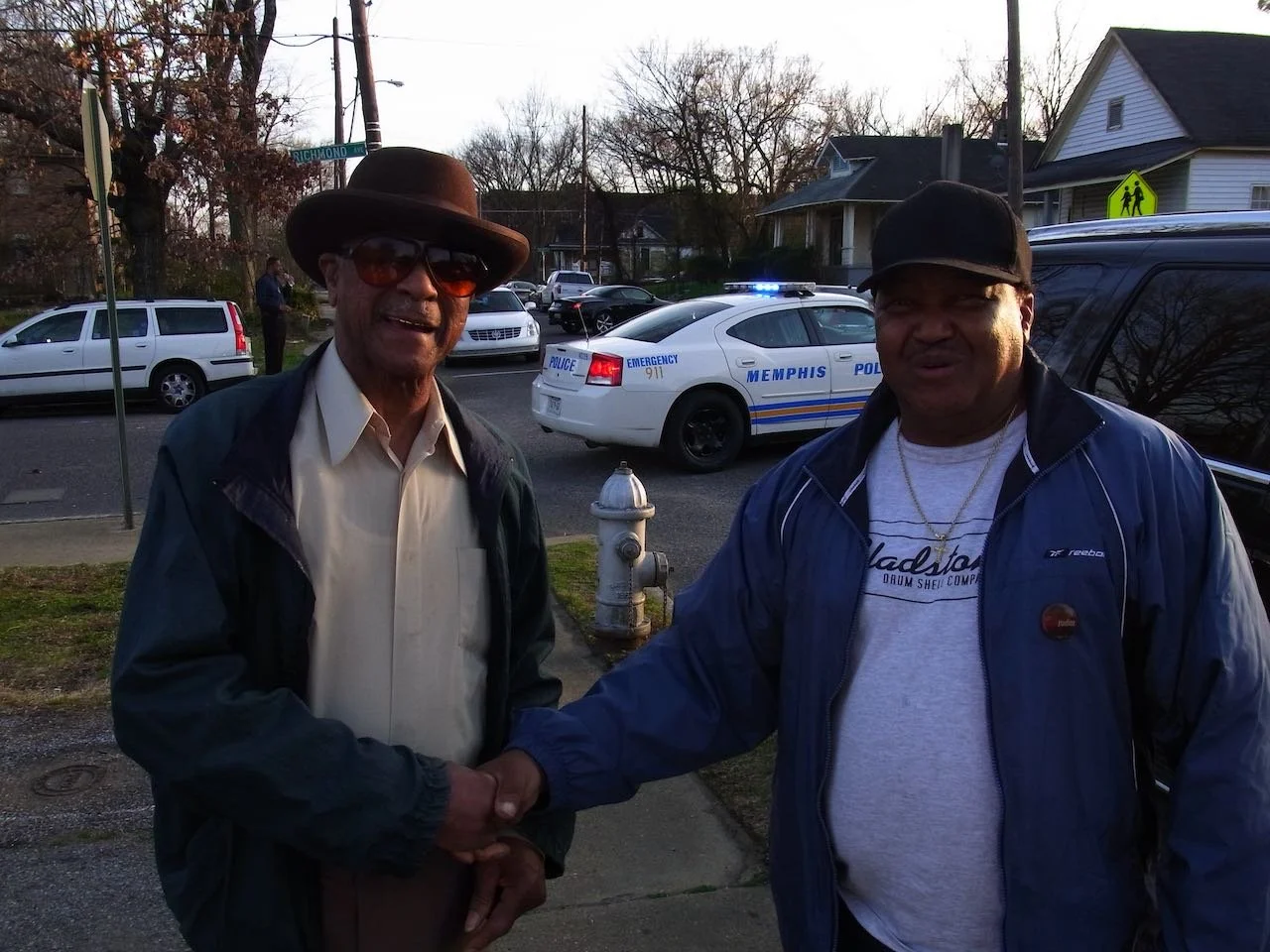

Preston on his friendship with Howard Grimes
Euology
Maybe it’s strange to feel like an eighty-year-old died young. I never saw Howard Grimes as old. He felt eternal. There’s a part of Howard’s message that I hope can live on. It’s that his hope for tomorrow came from his love of yesterday.
He enjoyed the elegance and dignity of the past. He saw people dress sharp, behave well, and conduct themselves with respect to others.
He liked for his musicians to be able to play instruments and play well. He felt connectivity in the culture, art, and manners of the past. He felt that these things had been lost but could be regained and would go a long way towards solving the trouble he saw.
Howard had a fan’s love of his own music and the world that made it. He fully understood the magic of Memphis in the late 1950s and early ’60s. He appreciated it while he was there and felt blessed to have been part of it. “I didn’t know things were gonna change,” he said. “I wanted it to last forever.”
More than once, I pulled up in Howard’s driveway, unannounced, and caught him with a bottle of whiskey, a bottle of coke, a cup of ice and his boom box, listening to his Hi Records boxset. I don’t know anyone else who so joyfully embraced their past work. But hey, it was the perfect reaction to perfection.
Growing up in California, I did not hear much about God. But being around Howard, I felt like God was whispering in his ear.
Sometimes God gave him some funny advice. Two or three Christmases ago, someone gave Howard a bottle of nice merlot. He drank it and called me in a fantastic mood. He said, “God told me, ‘don’t drink no more water, for I turned it to wine.’”
This relationship with God also gave him a beautiful way of speaking. He didn’t just say, “I thought about you,” he said, “God put you on my heart.”
When I heard that Howard had gone, God put it on my heart to turn on WDIA. Of course the song they were playing was one of his, and for the moment it was the perfect title: “Trying to Live My Life Without You.”
As I was sitting there wondering about these things, I realized, we don’t have to live our lives without Howard. Listening to his drumbeat I realized that he’s going to live forever.
Preston Lauterbach, February 2022
Obituary
It might seem strange to feel that someone who lived for eighty years died young, but Howard Grimes never got old. He felt eternal. The drummer’s music spanned worlds in the entertainment universe. Around 1961, he gigged with Isaac Hayes inWest Memphis, Arkansas at the Plantation Inn. According to a 2021 Rolling Stone feature on Howard, a beat he recorded for an Al Green song had been sampled 184 times. The pennies he earned with Hayes amounted to more money than he ever saw from hip-hop residuals.
Howard epitomized the Memphis sound. His steady beat and steady manner were foundational to some of the greatest music ever made in one of the country’s greatest music cities. “I always felt drawn to the beat in music and the rhythm in life,” Howard wrote in his autobiography. “Willie Mitchell told me, ‘I put the clock on you. I wanted to see if you were on time. You were perfect. Right with the second hand.’”
Born at home in North Memphis on August 22, 1941, Grimes recalled that the city looked more like the country, with telegraph poles along unpaved streets. As a boy, he would follow the white truck that serviced jukeboxes for the local record distributor and sit outside the little taverns where the truck stopped to hear the newest records. The sounds of feet stomping on the wooden floor at the local church and his mother snapping her fingers to her jazz and blues records put rhythm on Howard’s mind.
As a 12-year-old, he joined the band at Manassas High School, a music factory where Jimmie Lunceford had once taught and future jazz luminaries Charles Lloyd, George Coleman, Frank Strozier, and Booker Little were upperclassmen. In the city’s intense high school band competitions, Howard ran up against Maurice White, a Booker T. Washington High student who would found Earth, Wind, and Fire.
Howard’s school band director Emerson Able, Jr., a future member of the Isaac Hayes Movement, brought Howard along on gigs in the city’s fertile nightclub scene, where the drummer was soon in demand for his perfect time. Howard played with Ben Branch and the Largos at Currie’s Club Tropicana in North Memphis, and around neighborhood joints in Orange Mound with local disc jockey, emcee, and as yet one-hit wonder, Rufus Thomas.
With Thomas, Howard first entered the recording studio, for a then unknown concern called Satellite Records. Rufus cut “Cause I Love You,” it became a hit, and Satellite became Stax. Howard recorded many of the iconic label’s early classics backing Carla Thomas, William Bell, the Mad Lads, and Eddie Floyd. He missed the call that went to Al Jackson Jr. to play the session that resulted in “Green Onions,” and would often be mentioned as Jackson’s runner-up. Really, Howard loved Jackson as a person and convincingly made a claim equal to Jackson’s as the city’s top drummer during its renaissance of soul in the 1960s and ’70s.
Howard found his place a mile or so down the road from Stax with the label’s nearest local competitor, Hi Records, at Royal Recording Studios. Working with producer Willie Mitchell and the three Hodges brothers, Howard provided the heartbeat of the formidable Hi Rhythm section. Their body of work virtually boggles the mind, recording chart hits over a ten-year period for Mitchell, O.V. Wright, Ann Peebles, Denise LaSalle, the Detroit Emeralds, Syl Johnson, and, of course, Al Green, with whom Howard can be heard on movie soundtracks, car commercials, and sampled within the hit songs of Notorious B.I.G., Mary J. Blige, and Kanye West.
Howard’s autobiography Timekeeper came out in 2021. In it, he explained, “I don’t know exactly how many records that I played on have sold, but it’s well into the millions with plenty gone gold and plenty of Grammys handed out to other artists. As the drummer, it wasn’t my job to be out front, I needed to hang back. The world don’t have to see me. People bought the records. They already feel me.”
Publishing the book encapsulated a lifelong mission for Howard. Elder musicians had observed his keen listening and intense quietness in his youth. They entrusted him to pay attention, listen to their stories, and share them with history. He lived up to their trust.
Working with Memphis soul stalwarts the Bo-Keys over the last decade of his life, Howard recorded with Cyndi Lauper and on the 2021 Grammy-nominated album of his old Hi Records colleague Don Bryant, among others.
Howard felt deeply connected to the glory days of Memphis music. A part of him remained there. He cherished his work with white artists, like producer Chips Moman, feeling that music had the ability to bring people together. He’d seen it and lamented its loss. “I didn’t know things were going to change,” he remarked of the heyday of Memphis music. “I wanted them to stay that way forever.”
In relation to his impeccable rhythm and excellent ear, Howard had an uncanny ability to channel people he’d known, to bring them back to life in voice and manner.
He could break into a Rufus Thomas routine or an impression of Sunbeam Mitchell that absorbed his posture, facial expression, and the sound of his voice. He remembered people’s catchphrases and the nicknames they gave him.
Howard also had the unique ability to find joy in what he’d done. In later years, he loved few things more than sitting on his front porch with a beer, rocking out to his Hi Records box set. He didn’t need another soul.
Howard Grimes died on February 12, 2022, in his hometown. He leaves behind a loving wife, many devoted family members, dear friends, and a life’s work that will last forever. Willie Mitchell’s clock got it right—Howard was perfect.
Preston Lauterbach, February, 2022
Media & Press
See Howard’s interview at the Grammy Museum
Rolling Stone | Al Green Drummer Howard Grimes on New 'Timekeeper' Memoir
Howard Grimes and Preston Lauterbach sit down for an in-depth feature Read at Rolling Stone.
The Commercial Appeal | Howard Grimes' 'Timekeeper': A look at Hi Records drummer's landmark memoir
A comprehensive regional feature detailing the musical education of "The Bulldog" under the guidance of legendary Memphis mentors Read at The Commercial Appeal.
The Memphis Flyer | Howard Grimes on His New Book and Bulldogging the Beat
An intimate hometown interview tracking the specific transition from early 1960s R&B to the smoldering funk of the 1970s, released alongside the official curated Spotify book companion playlist. Read at The Memphis Flyer.
The Arts Fuse | Book Review: Howard Grimes's Timekeeper
A national literary critique profiling the historical weight of the book, positioning Grimes's shocking, first-hand testimony as a vital addition to the history of obscure southern session players. Read at The Arts Fuse.
Soul Country | Howard Grimes Gets His Day in Memphis
A feature coverage piece capturing Grimes's celebratory appearances and public book talks at the Stax Museum of American Soul Music, mapping his drumming legacy from Carla Thomas to Ann Peebles. Read at Soul Country.
No Depression | Drummer Howard Grimes Weaves Memphis Through His Memoir
A Roots-music review highlighting how the autobiography serves as a vivid time-capsule of regional geography and urban evolution through the eyes of the city's premier rhythmic timekeeper. Read at No Depression.
The STAX Museum of American Soul Music hosted a discussion and performance with Howard Grimes in 2021 to coincide with the book publication.
Author Chat with Howard Grimes on WREG Channel 3 News in Memphis, Tennessee
George Klein interviews Stax drummer Howard Grimes.
Alan Richard wrote a great profile of Howard for the Stax Museum of American Soul Music in 2021. One section is about Howard and Preston’s collaboration.

Howard and Preston sign books. Howard is signing a book for Boo Mitchell, Willie Mitchell’s son. Photo by Alan Richard from his excellent article about this great event at the Stax Museum
Grimes writes of many musical mentors as he came up in the North Memphis neighborhood known as New Chicago. One key figure was Emerson Able, Grimes’ high school music teacher at Manassas High School and later a member of the Isaac Hayes Movement. (Ironically, Mr. Able once kicked Hayes out of the high school band.)
It was Mr. Able who directed Preston Lauterbach to contact Grimes as the author did the research for his 2011 book, The Chitlin’ Circuit and the Road to Rock ‘n Roll.
Lauterbach began to visit Grimes regularly, and the drummer connected Lauterbach with lots of his musical friends and contacts.
Grimes had countless stories to tell. Lauterbach would often record their conversations.
“Every time he’d come here,” Grimes said, “we’d go to the seafood place over there next to the Memphis Drum Shop (Soul Fish Café).
Later, Lauterbach encouraged Grimes to let him assemble the stories into a readable order.
“I said, oh man, I couldn’t write a book,” Grimes recalled.
Then Lauterbach showed him what he’d put together. “You know when I read it, I saw my life. I feel so relieved.” Grimes said. “I started crying because I said, ‘This is me.’”
Howard Grimes’ Memphis Groove https://www.soulcountry.net/post/howard-grimes-memphis-greatest-grooves
Howard Grimes Gets his day in Memphis
https://www.soulcountry.net/post/howard-grimes-gets-his-day-in-memphis