Bluff City:
The Secret Life of Photographer Ernest Withers

Bluff City
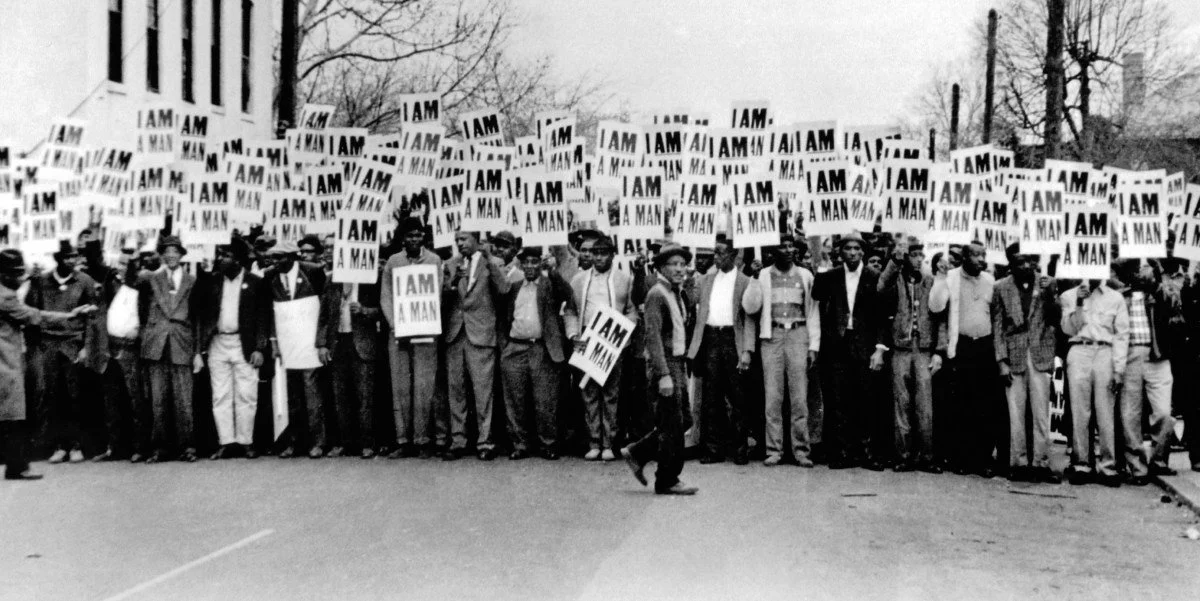
Ernest Withers was the most important photographer of the civil rights movement. He was at the Emmett Till trial. He documented the Montgomery bus boycott, the Memphis sanitation strike, and Martin Luther King Jr.'s final days in the city where he was killed. His photographs defined how America saw the movement.
He was also an FBI informant.
Lauterbach’s riveting recounting of the sanitation strike, and the stranger-than-fiction role Withers may have played in the riot that threw it into chaos, would be enough to make Bluff City an indispensable work.
Steve Nathans-Kelly, New York Journal of Books
Meticulous and engrossing.
Anjali Enjeti, Atlanta Journal-Constitution
Lauterbach’s vibrant study of Withers, a black photographer in Memphis who documented the civil rights era while also serving as an informant for the F.B.I., doubles as a love letter to Withers’s hometown.
Editors' Choice, New York Times Book Review
Bluff City does a masterful job of telling the story of civil rights in Memphis in the 1960s, framing it with Withers’ biography, and culminating with the sanitation workers’ strike that would bring King to town—and to his death. Not only is it a great narrative, it’s also a reminder, in these polarised times, that moral complexity is baked into human affairs, and that sometimes people do the wrong thing for what they perceive is the right reason.
Ed Ward, Financial Times
[Preston] Lauterbach… provides a better feel for life in Memphis… [and] a thoughtful analysis of Withers’s talent as a photographer.
Clifford Thompson, Wall Street Journal
Bluff City does a masterful job of telling the story of civil rights in Memphis in the 1960s. ... [A] great narrative.
Ed Ward, author of The History of Rock & Roll, Vol 1: 1920-1963, Financial Times
A story vividly told.
Alice Speri, The Intercept
Lauterbach ... provides a better feel for life in Memphis ... [and] a ... thoughtful analysis of Withers’s talent as a photographer.
Clifford Thompson, Whiting Award-winner and author of Twin of Blackness, Wall Street Journal
A loose, rangy history of the civil rights movement in Memphis, using Withers and his camera as the (literal) lens. [Lauterbach’s] done the work, tracking the complex, intertwined dances of the radicals and the centrists, the local ministers and visiting heavyweights like King.
Christopher Bonanos, New York Times Book Review
Meticulous and engrossing.
Atlantic Journal-Constitution
Through intimate reporting and effortless storytelling, Bluff City captures both the tragic ironies of FBI espionage and the fertile contradictions of Memphis, Tennessee. The photographs of Ernest Withers—spy, artist, race man, and cagey black conservative—have never looked more meaningful.
William J. Maxwell, author of F.B. Eyes: How J. Edgar Hoover’s Ghostreaders Framed African American Literature
Through intimate reporting and effortless storytelling, Bluff City captures both the tragic ironies of FBI espionage and the fertile contradictions of Memphis, Tennessee. The photographs of Ernest Withers—spy, artist, race man, and cagey black conservative—have never looked more meaningful.
William J. Maxwell, author of F.B. Eyes: How J. Edgar Hoover’s Ghostreaders Framed African American Literature and editor of James Baldwin: The FBI File
Lauterbach provides a fresh, balanced, and provocative exploration of the photographer’s life and controversial choices.
Booklist
[A] fantastic story.
Publishers Weekly
[A] vibrant study of Withers… [and] a love letter to Withers’s hometown.
New York Times Book Review, Editors’ Choice
Bluff City reconstructs Withers's double life — the trusted insider who photographed the struggle from within while feeding names, plans, and intelligence to the Bureau that surveilled it. Lauterbach spent years with declassified FBI files and Memphis archives, and what he found is not a simple story of betrayal but something more unsettling: a man whose loyalty to his community and his complicity with its enemies were genuinely, irreducibly entangled. The book is at once a biography, a history of civil rights Memphis, and a study in the moral complexity that attends survival under a surveillance state.
New York Times Book Review Editors' Choice. Featured in the PBS documentary The Picture Taker.
Selected Press & Interviews: Bluff City
NPR Weekend Edition Saturday | ’Bluff City’ Captures Photographer Ernest Withers During Civil Rights Movement
Host Scott Simon sits down with Preston Lauterbach to discuss the stunning double-life of Ernest Withers, examining the moral crossroads and complex personal history of the iconic photographer who documented the front lines of the freedom struggle while operating as a secret FBI informant. Read & Listen at NPR.
The New Yorker | Vibrant Study: The Moral Complexity of Ernest Withers
A featured critique praising Lauterbach's vibrant study of Withers, tracking how the book captures the tense, double-life of the trusted Civil Rights photographer who simultaneously worked as a secret informant for the FBI.
The New York Times Book Review | The Civil Rights Movement Photographer Who Was Also an F.B.I. Informant
Critic Christopher Bonanos delivers a New York Times Editors' Choice review evaluating the loose, rangy history of the civil rights movement in Memphis, praising how Lauterbach tracks the complex, intertwined dances of local ministers, radicals, and law enforcement through Withers’ lens. Read at The New York Times.
Financial Times | Moral Complexity Is Baked Into Human Affairs
Rock historian and critic Ed Ward delivers a powerful review, stating that the book does a masterful job of telling the story of civil rights in Memphis in the 1960s, serving as a vital reminder that moral complexity is baked into human affairs.
The Washington Post | The Double Life of a Civil Rights Chronicler
An extensive feature review profiling how Lauterbach used declassified FBI files to meticulously unspool the tragedy and conflicts of a man caught between the vanguard of the freedom struggle and the demands of federal surveillance.
Newsweek | Inside the Secret History of 'Bluff City'
A national news feature and author interview diving deep into the technical archival process, detailing how years of Freedom of Information Act (FOIA) requests exposed the secret relationship between Memphis law enforcement and the Black press.
The Commercial Appeal | Unmasking an Icon: Preston Lauterbach’s Chronicle of 1960s Memphis
A prominent hometown feature examining how the book courageously confronts the raw, painful local history of the sanitation workers' strike and Martin Luther King Jr.’s final days through a fresh biographical lens.
Media
NPR’s Weekend Edition
Scott Simon interviews Preston Lauterbach about Bluff City
'Bluff City' Captures Photographer Ernest Withers During Civil Rights Movement
U. S. National Archives
Lecture at the National Archives, Washington, D. C.