Chitlin’ Circuit’s dramatis personae
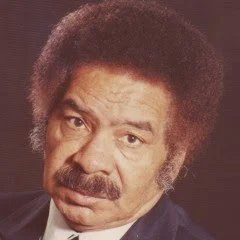
Sax Kari
Payola bagman, stand-up comedy second banana, composer of blaxploitation film soundtrack—for The $6,000 Nigger to be precise—emcee, leader of a big band, record producer, and talent broker, for starters. He worked in virtually every city relevant to 20th century American music, Memphis, New Orleans, Chicago, Miami, and New York, and in every genre from swing to hip-hop. Sax was always one step shy of brilliance and fame, unlocked the story of the circuit, and I named my son after him.
Renaissance Bagman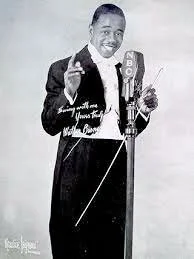
Walter Barnes
Chicago Defender band columnist, glamorous band leader, protected by Al Capone, the “Midget Maestro” enthralled both newspaper readers and audiences across the country. He sensed opportunity in the world beyond Chicago, and after Capone’s strength waned, Barnes used his Defender platform to explore it. The Chitlin’ Circuit explains, for the first time, Barnes crucial role as a pioneer of one of the most important institutions of American popular music.
Band leader & Journalist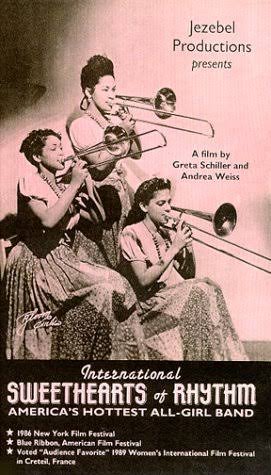
Hardworking Touring MusiciansThe International Sweethearts of Rhythm
The International Sweethearts of Rhythm were just as varied and colorful as their name suggested, including a racially-integrated line-up of women from Hawaii, Mexico, China, and Mississippi, a trombone player known as Rabbit, and a 300-pound, proud lesbian called Tiny.
Agent of TransformationLouis Jordan
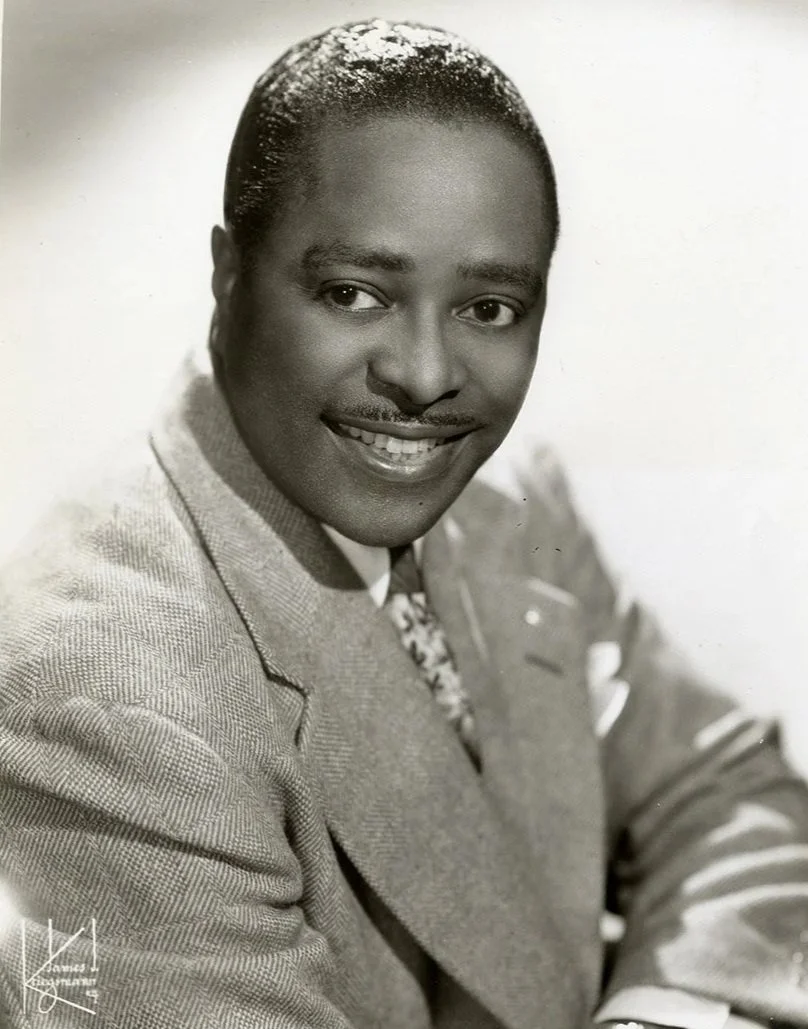
Louis Jordan is one of the more grossly misunderstood artists in American music. Not that he’s overlooked. He is in the Rock ‘n’ Roll Hall of Fame. It’s that the writers of music history describe him either as a novelty act—many of his lyrics are clever or funny, and all are delivered silvery smooth—or an exponent of the fictitious genre jump blues. Let’s get this straight: Louis Jordan was the key figure in the transformation of American pop from big band swing to small band rock ‘n’ roll.
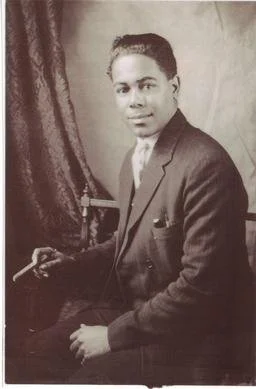
Denver Ferguson
The Chitlin’ Circuit details how this racketeer brought the chitlin’ circuit to its maximum operational power, running a dozen bands in cycles throughout black America. He developed an intricate web of concert promoters and black nightclub owners, while also training barbers and bartenders to promote his shows in, as he explained, “non-descript places, where the tax man won’t be counting heads at the door,” much as he had cultivated numbers runners to make him rich on the streets of Indianapolis. The taxman eventually caught up to him, as did international scandal.
Racketeer Visionary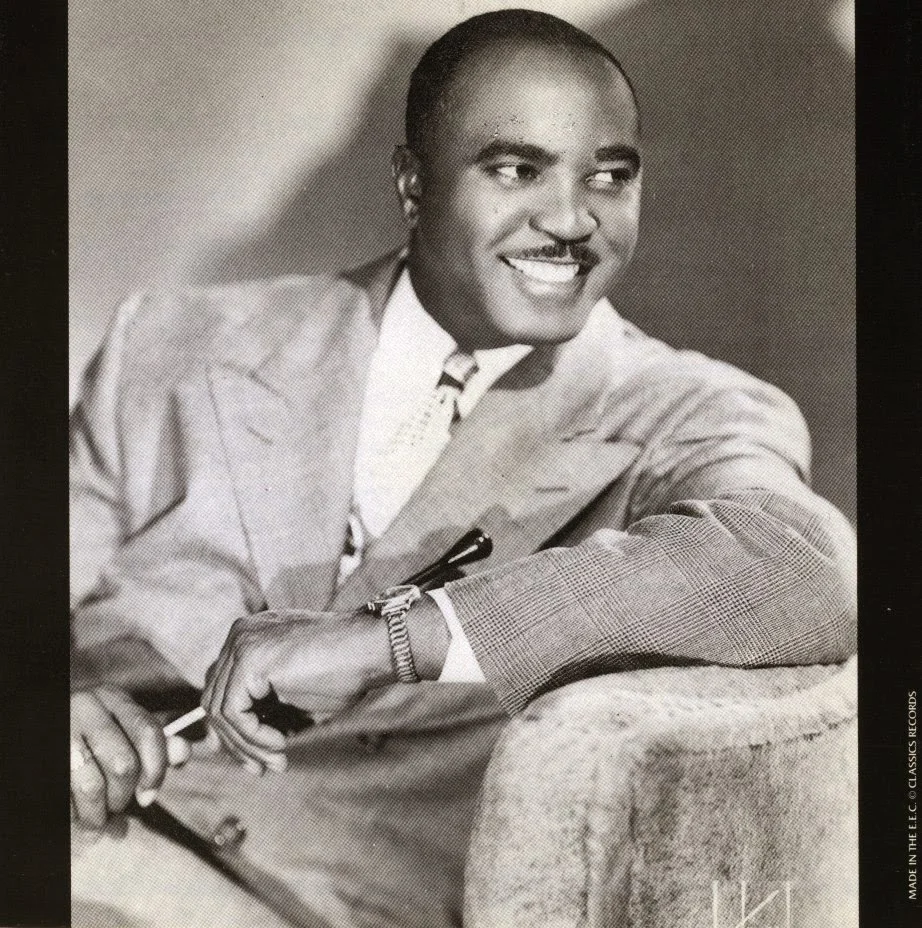
Jimmie Lunceford
Lunceford’s talent was rated swing aristocracy—his Harlem Express band took over Cab Calloway’s Cotton Club residency in 1934, after Calloway had bumped Ellington. But Lunceford bristled at syndicate business practices. He pulled out of the Cotton Club and took his topflight orchestra on tour through the Deep South’s little Cotton Clubs. Lunceford brought star power and new promotional tactics to the chitlin’ circuit, but perhaps his most enduring legacy is as an a music educator who nurtured some of Memphis’s most important musicians.
Band leader ExtraordinaireSax Kari
Born February 6, 1920, Chicago, Illinois
Died October 1, 2009, Brandon, Florida
Circuit active: 1942-82
This book needed Sax Kari. In 2003, after meeting the glamorous, remarkable, self-proclaimed “King of the Chitlin’ Circuit,” a performer named Bobby Rush, I began telling people that I was writing a book about this chitlin’ circuit. Months piled up, but pages did not. I composed outlines and interviewed artists, but no narrative emerged, due to one rather severe obstacle—I had no idea how the circuit began and therefore, no way to begin the story.
Mercifully, a friend who would gently pose questions that opened doors throughout the life of this project, suggested that I give Sax Kari a call. When I got him on the phone, Sax laughed at the idea of me writing the history of the chitlin’ circuit. He said: “I worked for the man who invented the chitlin’ circuit.” But he welcomed me to come see him in Florida all the same, and in fall 2005, I did.
After spending a morning listening to his stories, it was quite clear that this guy had done it all to make a buck in the entertainment business: payola bagman, stand-up comedy second banana, composer of blaxploitation film soundtrack—for The $6,000 Nigger to be precise—emcee, leader of a big band, record producer, and talent broker, for starters. He’d worked in virtually every city relevant to 20th century American music, Memphis, New Orleans, Chicago, Miami, and New York, and in every genre from swing to hip-hop.
Sax had a sense of humor. He gave me a pile of old pictures of himself, hoping I could use them to help him find work. I asked him to sign one for me. Sitting there in his busted-up trailer—seriously, sun shined through cracks in the walls—he said, with maximum composure and dignity, “My signature is worth over ten thousand dollars.”
Of all Sax’s one-liners—“I’ve made love to chorus girls and movie stars, some of them wouldn’t even tell me their real names”—and tales from the hot spots, his memories of his mentor would provide the biggest breakthrough for my research. For a million years, I could have told people I was writing a book about the chitlin’ circuit and never, ever thought that it could have spun out of Indianapolis, and never known to investigate a printer turned racketeer and nightclub boss there named Denver D. Ferguson as, in Sax’s terms, “the man who invented the chitlin’ circuit.” Now, it would turn out that Denver was an inventor more in the sense that he perfected others’ innovations in the field. But the story of the circuit without Denver Ferguson would not have been complete. And this book, without Sax Kari, would have never hit the shelves.
Walter Barnes
Born July 8, 1905, Vicksburg, Mississippi
Died April 23, 1940, Natchez, Mississippi
Circuit active: 1931-40
In 1930 all was well for Walter Barnes. While the rest of the country felt the fallout from the 1929 stock market crash, Barnes was Depression-proof, leading the house band at Al Capone’s Cotton Club in Cicero, Illinois. As renowned bassist Milt Hinton recalled, “The Barnes band was the band to be in then. It wasn’t special, but it was Al Capone’s pet…Capone had opened up this tremendous club as a hangout for his boys, the whole syndicate. It was Prohibition time. They controlled all the liquor in Chicago, and they had nothing but money.” But Barnes’ fate turned with that of Scarface. When the Feds cracked Capone February 28, 1931, Barnes lost the best friend his wardrobe ever had. He hung on for a year, thanks to bookings from the Capone-satellite talent agency, MCA, but by the next year, he’d become a reluctant independent businessman.
Barnes the journalist had started out as the Chicago Defender band columnist, finding time between Cotton Club shows to relay local band gigs and gossip. The Defender circulated nationally, and Barnes’ name began to get around. Touring the Midwest for MCA broadened his perspective. He met territory dance promoters and performed at nightclubs, brotherhood temples, and requisitioned agricultural buildings. He sensed opportunity in the world beyond Chicago, and after Capone’s strength waned, Barnes used his Defender platform to explore it. “Walter Barnes would like to communicate with all promoters and clubs who are interested in first class dance promotions,” he wrote in February 1932.
Answers were not long in coming. With his ultramodern media savvy, Barnes created an aura and an audience for himself throughout black America. If Barnes is known at all today, it is for his spectacular death. The Chitlin’ Circuit explains, for the first time, Barnes crucial role as a pioneer of one of the most important institutions of American popular music.
Denver Ferguson
Born February 19, 1895, Brownsville, Kentucky
Died May 11, 1957, Indianapolis, Indiana
Circuit active: 1941-51
Al Capone’s ouster hardly spelled T-H-E E-N-D for the vice/music correlation in the black band biz.
Denver D. Ferguson moved to Indianapolis, Indiana in 1919. Most of the architecture in the city’s black section, along Indiana Avenue, could give you splinters. Over the next two decades, Denver would help transform the Avenue into a neon-glowing city within the city, where the top acts in black entertainment could be enjoyed any night of the week.
It began with a numbers racket. Denver set up shop for his legit trade, printing, soon after arriving. One of his jobs was to print policy slips for an out-of-state street lottery, the kind that was gaining major prominence in Harlem and the south side of Chicago. Denver introduced his own version of the game to the growing black population on the Avenue. Though he kept his printer’s smock on and his fingers inky, Denver and his brother Sea ascended to kingpin status.
Their cash surplus led, naturally, to two outlets: property ownership and the nightlife business. The Fergusons reigned supreme, and by the end of the 1930s, their vision for a glamorous black Indianapolis had come true, as posh nightclubs flickered up and down the Avenue, black businesses flourished on the strip, and new housing replaced some of the substandard conditions. Sea ran the Cotton Club on the south end of the Avenue and Denver operated Sunset Terrace at the Avenue’s northern terminus.
Trouble caught up to them in 1940. A rash of violence, perpetrated most notoriously in the Avenue club run by the Fergusons’ white rivals, brought unwanted attention. Though the black underworld had largely been safe from racism, the authorities punished only the black-owned Avenue clubs, revoking licenses to sell spirits. Denver sensed the right time to look beyond the Avenue for his livelihood, and in late 1941, he launched Ferguson Bros. Agency, which would quickly become the most powerful black-owned talent firm in the country.
Denver drew controversy like a cigarette butt does lipstick. It stayed all over him for much of his career. For the first time, The Chitlin’ Circuit details how this racketeer brought the chitlin’ circuit to its maximum operational power, running a dozen bands in cycles throughout black America. He developed an intricate web of concert promoters and black nightclub owners, while also training barbers and bartenders to promote his shows in, as he explained, “non-descript places, where the tax man won’t be counting heads at the door,” much as he had cultivated numbers runners to make him rich on the streets of Indianapolis. The taxman eventually caught up to him, as did international scandal.
Denver Ferguson is an undeservedly obscure figure in American music history, the ultimate gambler, who finally gets his just star treatment in The Chitlin’ Circuit.
Jimmie Lunceford
orn June 6, 1902, Fulton, Mississippi
Died July 12, 1947, Seaside, Oregon
Circuit active: 1934-47
While Walter Barnes plied the black-owned plank ballrooms down South during the early ’30s, bandleader Jimmie Lunceford broke into the upper echelon of the biz, which was controlled by a powerful conglomerate of mob-style nightclub bosses, white New York talent agents, and the Musicians Union. The lines between these entities were blurry where they existed at all. Collectively, they were known as the syndicate. They controlled the top black jazz bands, like Duke Ellington, Cab Calloway, and Count Basie.
Lunceford’s talent was rated swing aristocracy—his Harlem Express band took over Cab Calloway’s Cotton Club residency in 1934, after Calloway had bumped Ellington. But Lunceford bristled at syndicate business practices. He pulled out of Harlem’s swank Cotton Club and took his topflight orchestra on tour through the Deep South’s little Cotton Clubs, where the territory was too vast for the union to effectively police and the money too thin for the big agents to fool with.
As Barnes innovated the use of print media to effectively promote far-ranging tours through black America, Lunceford’s management team innovated the use of another emerging technology to propel the Harlem Express. As Seeburg jukeboxes were installed in every nickel and dime black café down South, an idea dawned on Dave Clark, who led a blues band and gophered for a Jackson, Tennessee dance promoter. “Every town Lunceford was playing in, I could go in front of the band and get his record on the jukebox.”
Lunceford brought star power and new promotional tactics to the chitlin’ circuit, but perhaps his most enduring legacy began before he made a name for himself on the bandstand. From 1927-30, Lunceford taught at Manassas High School in Memphis, Tennessee. Before Lunceford, the segregated black public schools offered no formal training in music. Lunceford raised funds for a school band in the North Memphis community, and helped institute music education in the black Memphis public schools. Over the next four decades, the Memphis public schools produced world-renowned talent—soul men Willie Mitchell, Booker T. Jones, and Isaac Hayes, members of the Hi Rhythm and the Bar-Kays; leader of the Ray Charles orchestra, Hank Crawford; and ingenious jazz soloists like pianist Phineas Newborn Jr and multi-instrumentalist Charles Lloyd.
Lunceford isn’t as well-remembered as his peers, but those who knew classified him at the top. “Jimmie Lunceford has the best of all bands,” remarked “In the Mood” composer Glenn Miller. “Duke is great, Basie is remarkable, but Lunceford tops them both.” The Chitlin’ Circuit highlights this key figure in American music.
Louis Jordan
Born July 8, 1908, Brinkley, Arkansas
Died February 4, 1975, Los Angeles, California
Circuit active: 1942-1959
Louis Jordan is one of the more grossly misunderstood artists in American music. Not that he’s overlooked. He is in the Rock ‘n’ Roll Hall of Fame. It’s that the writers of music history describe him either as a novelty act—many of his lyrics are clever or funny, and all are delivered silvery smooth—or an exponent of the fictitious genre jump blues. Let’s get this straight: Louis Jordan was the key figure in the transformation of American pop from big band swing to small band rock ‘n’ roll.
That’s not to claim he was the first rock ‘n’ roll artist, but more of a big bang in the black music universe. In a time where big bands ruled, and people came out to hear featured instrumental soloists, Jordan and his Tympany Five did things in a new way, coming on strong with hit recordings in late 1941 and a breakthrough chitlin’ circuit tour in 1942. Veteran circuit performer “Gatemouth” Moore explained Jordan’ revolutionary effect: “He could play just as good and just as loud with five [pieces] as [other bands were with] 17. And it was cheaper.”
Promoters, club owners, and patrons all loved that last part. During World War II, there was a nightclub boom in black America, as total employment led to unprecedented amounts of leisure cash. After the war, though, the booming black economy busted. Owners of the new nightclubs needed to make their ventures work. Fortunately for them, the Jordan fad had caught on. Not only did he play with a loud, ballsy combo rather than full orchestra, Jordan made the vocalist, himself, the main draw.
As “Gatemouth” Moore noted, this adaptation was every bit as revolutionary as Jordan’s small band configuration. “With the bands in the ’30s, the singer was like the porter. The singer set up the bandstand. He wasn’t the attraction in those days. But it done changed.”
Following twenty years of big band, the audience embraced the new sound, and for black music businessmen, the numbers worked. Louis Jordan’s fee, at least on his first tour, was $350, while Louis Armstrong’s was $1500. Throughout the war years and into 1946, Jordan had six #1 hits. None of his dozen 1946 releases peaked below #3 on the black music charts. The revolution was on. Small bands like Joe Liggins and the Honeydrippers and Johnny Moore and the Three Blazes followed Jordan’s small band-blues heavy blueprint to hit status.
By the end of the 1940s, numerous black big bands had died, swing was relegated to nostalgia, and the new sound had taken over the black music business. Billboard recognized as much, renaming its popular black record list the Rhythm and Blues chart. A new generation of singers stormed the scene, and Fats Domino, B.B. King, Little Richard, and James Brown all said Louis Jordan was their inspiration.
Just before his death in 1975, Jordan told historian Arnold Shaw, “I’d like to say one thing. Rock ‘n’ roll was not a marriage of rhythm and blues [to] country and western. That’s white publicity. Rock ‘n’ roll was just a white imitation, a white adaptation, of Negro rhythm and blues.”
Cherchez Les Femmes
Women worked every angle of the circuit, as performers, club owners, and agency executives, and did so with every bit of gusto the men mustered. Memphis musician Emerson Able recalled Sunbeam Mitchell’s wife and business partner Ernestine as a person not be trifled with. “She was as bad as he was,” Able said, and Sunbeam had once shot the sheriff of Tipton County, Tennessee.
Female performers played the circuit from its earliest days, projecting much of the same no-nonsense attitude from the stage that Ernestine Mitchell did behind the curtain. Lil Green toured for Denver Ferguson, singing praises of foreplay “(Romance) In the Dark,” masturbation, “Just Rockin’,” and marijuana, “Knockin’ Myself Out.”
The International Sweethearts of Rhythm were just as varied and colorful as their name suggested, including a racially-integrated line-up of women from Hawaii, Mexico, China, and Mississippi, a trombone player known as Rabbit, and a 300-pound, proud lesbian called Tiny.
Also in the Ferguson agency stable, the “Boogie Woogie Piano and Accordion Queen,” Christine Chatman, was hot on the circuit during World War II. Chatman carried her own opening act, who was known at first as the “Hey Lawdy Mama,” but better remembered as Big Maybelle.
Club owners like “Red” Ruby Edwards and, later, Mary Shepard, both active in the Mississippi Delta, operated first-class nightclubs with panache, authority—and all the extras.
The two top black-owned talent agencies, Ferguson Bros., and Don Robey’s Buffalo Booking, boasted high-ranking ladies. As Sax Kari, a Denver Ferguson protégé, recalled, the woman behind the Ferguson Agency’s success was neither Lil Green nor one of the International Sweethearts, but an executive named Twyla Mayfield. “Aside from [Denver’s] gabbing,” Kari said, “she was really the one who handled all the booking.”
The situation parallels that of the Buffalo Booking Agency in Houston, Texas, which was under the ownership of the noticeable Don Robey. But the patent leather pumps that pushed the likes of B.B. King, Little Richard, Johnny Ace, and Ike and Tina Turner from joint to joint belonged to Evelyn Johnson. She ran the booking agency, handling calls and contracts for Buffalo’s hot group of artists. She taught some rough young people how to carry themselves in public. She interceded in some classic battles between Little Richard and Big Mama Thornton. She developed strategies for breaking new artists, and dealing with fly-by-night promoters.
The Stroll
Circuit business operatives thrived not just despite racial segregation but because of it, taking advantage of Jim Crow geography. Black life in towns and cities centered in one crowded district, usually with one major thoroughfare, where you could buy a pint, get a shoeshine, join a backroom craps game, or catch a performance of one the day’s leading entertainers. It was the heart of darktown, or, in 1930s hep speak, The Stroll. Beale Street in Memphis and Rampart in New Orleans were already legendary strolls when the chitlin’ circuit got rolling, but by the late 1930s, stroll lifers on Second Street in Muskogee, Oklahoma, Desiard Street in Monroe, Louisiana, and W. Ashley in Jacksonville, Florida were part of it.
Rex's Billiards on Beale Street in 1939. Marion Post Wolcott.
The circuit as a whole was the sum of these parts, scores of black districts stretched across the map, performers traveling dot to dot. It was modeled after two wildly successful segregated business models, that of the black-nationally circulated Chicago Defender and the Madam C.J. Walker cosmetics system—that keyed on black population density and made real money cumulatively. Walker trained African-American hair stylists throughout the country to use Walker beauty techniques and to sell Walker beauty products, and funnel the money back to her.
Similarly, the chitlin’ circuit’s first overlord, Denver Ferguson, understood stroll dynamics. Knowing where stroll social hubs were, Ferguson recruited barbers and bartenders to promote his shows. Ferguson’s protégé Sax Kari said, “He took small town people and made them dollar wise.”
Pawn Shops on Beale. Marion Post Wolcott.
Just as segregation gave rise to this innovative black enterprise, integration forever changed the conduct of circuit business and brought an end to the chitlin’ circuit’s road to rock ‘n’ roll era.
Vice
While the circuit relied on black media for publicity, it received much of its operating revenue through the vice industry.
Drinking in Clarksdale, Mississippi. Marion Post Wolcott. Library of Congress
Circuit pioneer Walter Barnes got his start leading the band at Al Capone’s Cotton Club, pre-Depression, when Capone was one of several underworld supporters of swing.
The vice-chitlin’ circuit correlation went two ways with Denver Ferguson. Gambling both funded his chitlin’ circuit venture and influenced its conduct. Ferguson got rich operating a numbers racket in Indianapolis, and financed his talent agency, Ferguson Bros., with the proceeds. As the first real circuit mogul, running up to a dozen bands simultaneously throughout a network of under-kingpins across the map, Ferguson designed the circuit to function like his street lottery. He cultivated show promoters all over black America, who funneled the gate receipts of Ferguson’s band’s shows back to the boss. The numbers and circuit economy both worked on cumulative wealth.
As for the law, Denver developed a graft pay scale, correlating the amount of a police officer’s bribe to the officer’s rank. Elsewhere, protection payments and publicity-stunt raids kept the dice rolling.
Playing Skin, Sunbeam Mitchell's game of choice, 1941. Marion Post Wolcott. Library of Congress
Down in Houston, a Ferguson promoter named Don Robey ran a series of nightclubs that paid entertainers, but made their profits on liquor, cards, and dice. He became the most successful black record company owner, while exerting powerful influence behind the scenes to promote the small band blues that evolved into rock ‘n’ roll.
From Memphis, Tennessee, formidable nightclub owner Andrew “Sunbeam” Mitchell operated a multi-state goodtime empire, selling whiskey, women, and song from his Beale Street base throughout rural west Tennessee and down into Mississippi. Beginning in the late 1940s, he used emerging talents like Johnny Ace as his modern day medicine show pitchmen to draw crowds to buy his half-pints. Sunbeam himself was a championship card player, traveling around the South with fellow nightclub boss Harold “Hardface” Clanton, to play in Skin tournaments against other black playboys.
Complicit police? 1941. Marion Post. Library of Congress.
While the music biz has often been compared to organized crime, or said to be akin to it, they were basically one and the same on the chitlin’ circuit.
The Chitlin’ Circuit explores this underreported dynamic, spotlighting the importance of the underworld to the black pop music world.